Course
LAND 6730
Instructor
Prof. Alfie Vick
Credential
LEED Green Associate
Location
Athens, GA
Year
Spring 2026
Designed to Perform: rethinking ornamental groundcover systems as multi-beneficial socio-ecological infrastructure. LEED prioritizes integrated strategies that deliver co-benefits across categories — and alternative lawn systems reduce resource demand, improve habitat function, and enhance user experience through a single landscape intervention.
Why Rethink Turf?
- High irrigation demand
- Frequent mowing inputs
- Low biodiversity value
- A cultural default, not an ecological necessity
Landscapes succeed not only when they function ecologically, but when people emotionally accept, value, and defend them.
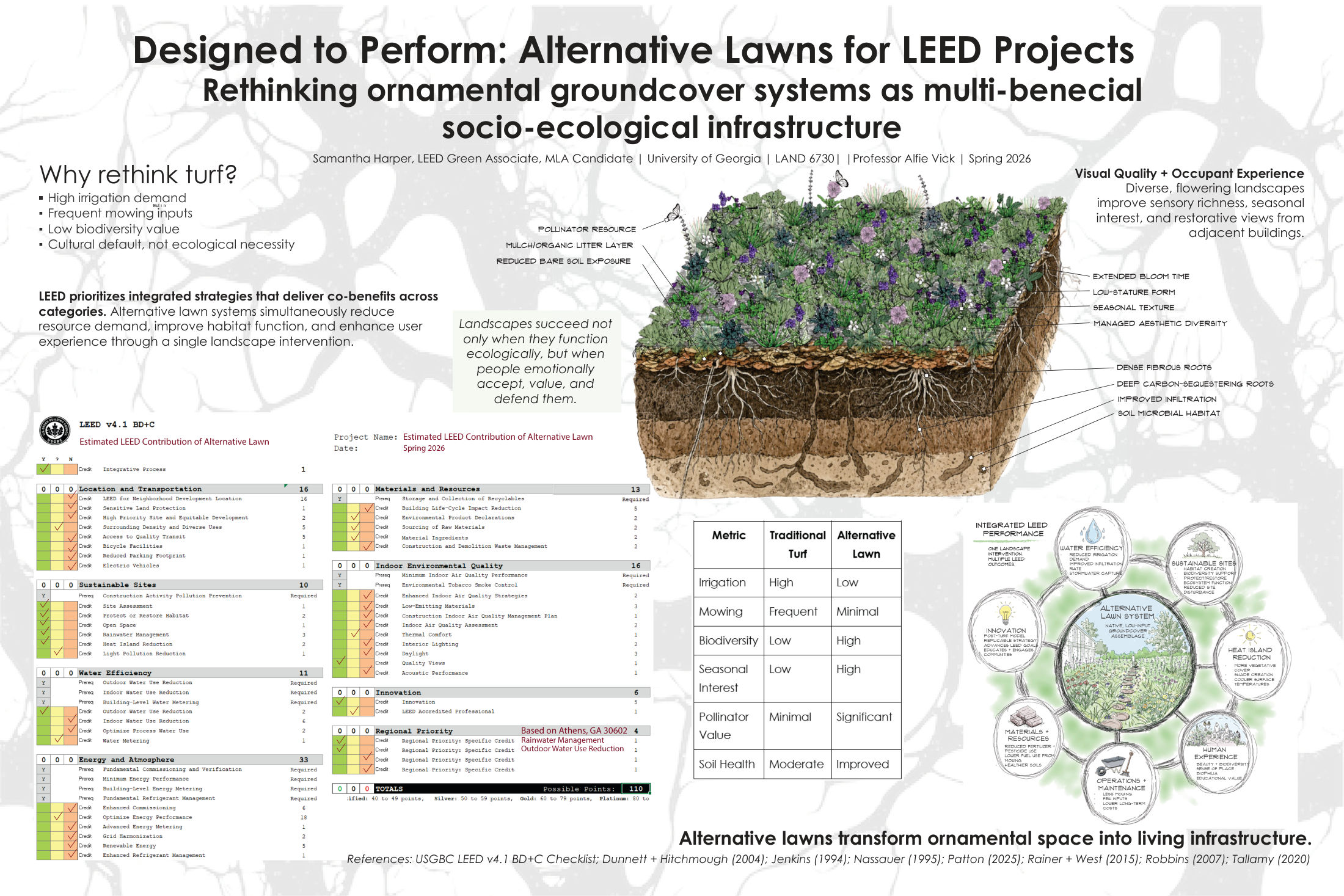
One Landscape, Many LEED Outcomes
A single alternative-lawn intervention advances goals across multiple LEED categories at once:
- Water Efficiency — reduced irrigation demand, improved infiltration, stormwater capture
- Materials & Resources — less fertilizer and pesticide, lower mowing fuel, healthier soils
- Sustainable Sites — habitat creation, biodiversity support, protected ecosystem function
- Heat Island Reduction — more vegetative cover, shade, cooler surface temperatures
- Human Experience — beauty, biophilia, sense of place, educational value
- Innovation — a replicable post-turf model that advances LEED goals
This framework is put into practice in the applied Alternative Lawns field trial, where these strategies are tested with real native-plant assemblages.
← All projects