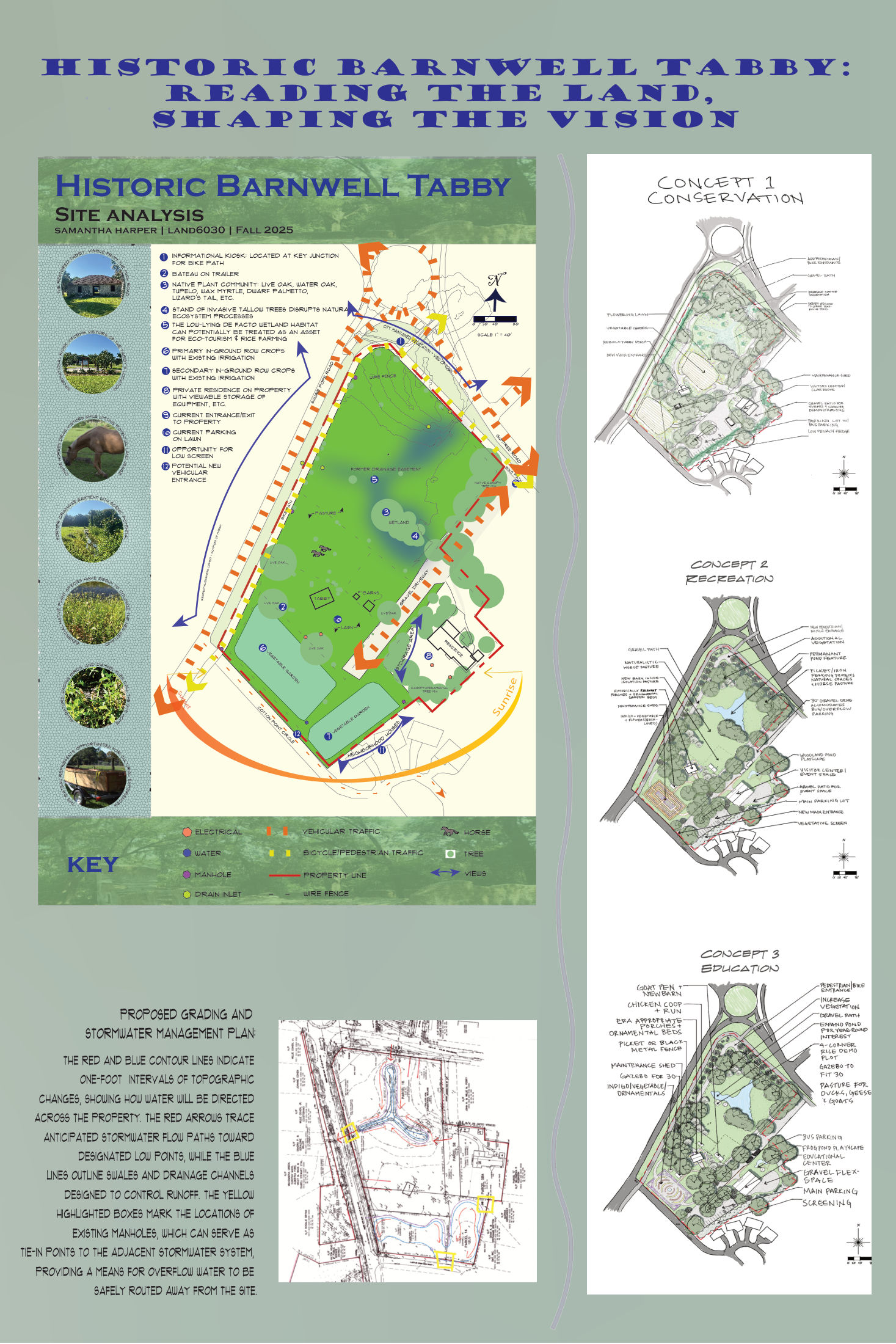
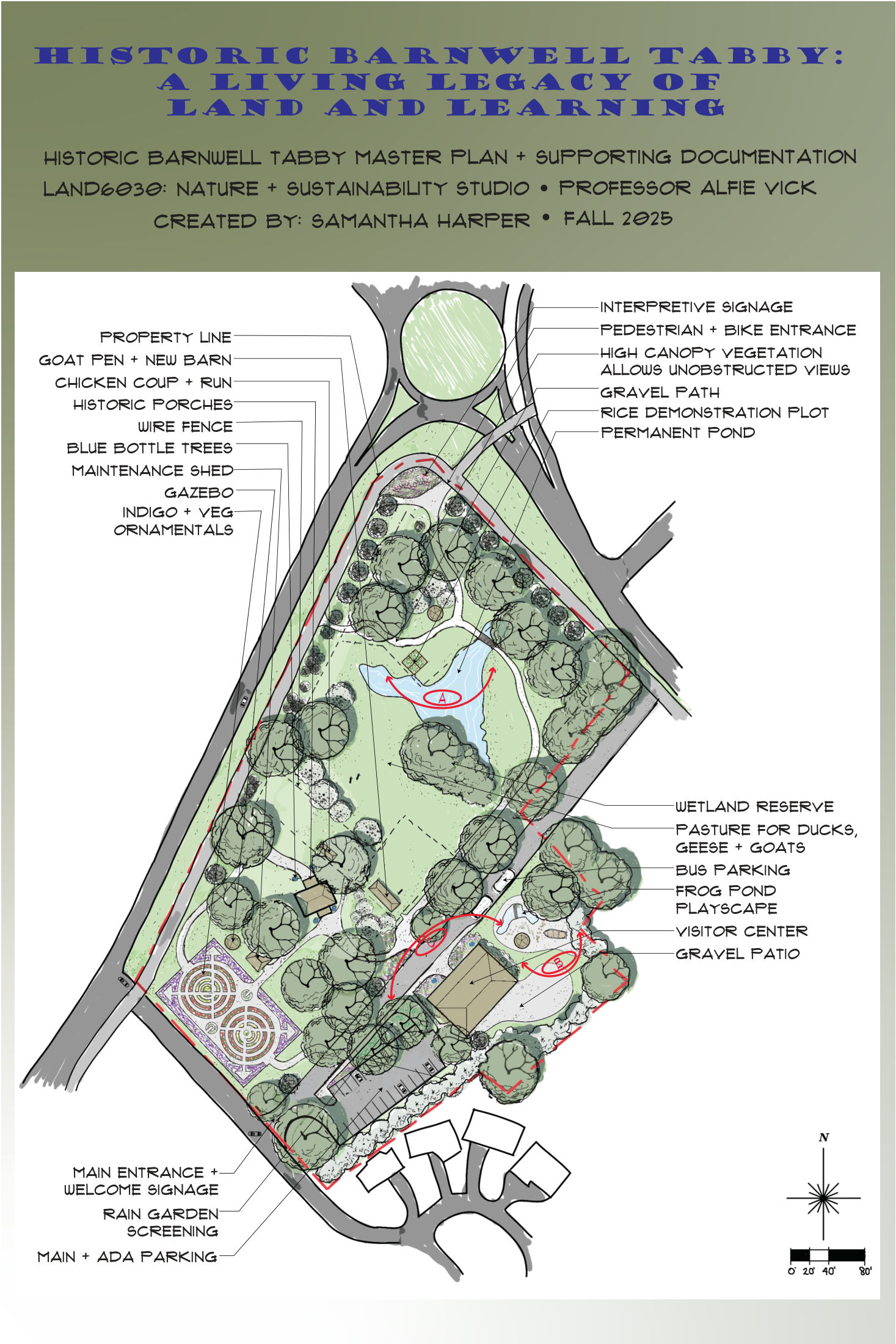
Historic Barnwell Tabby: a living legacy of land and learning. This master plan honors Gullah agricultural heritage — rooted in West African traditions and adapted to the coastal Sea Islands — through a landscape of heirloom crops, native wetland species, and educational plantings.
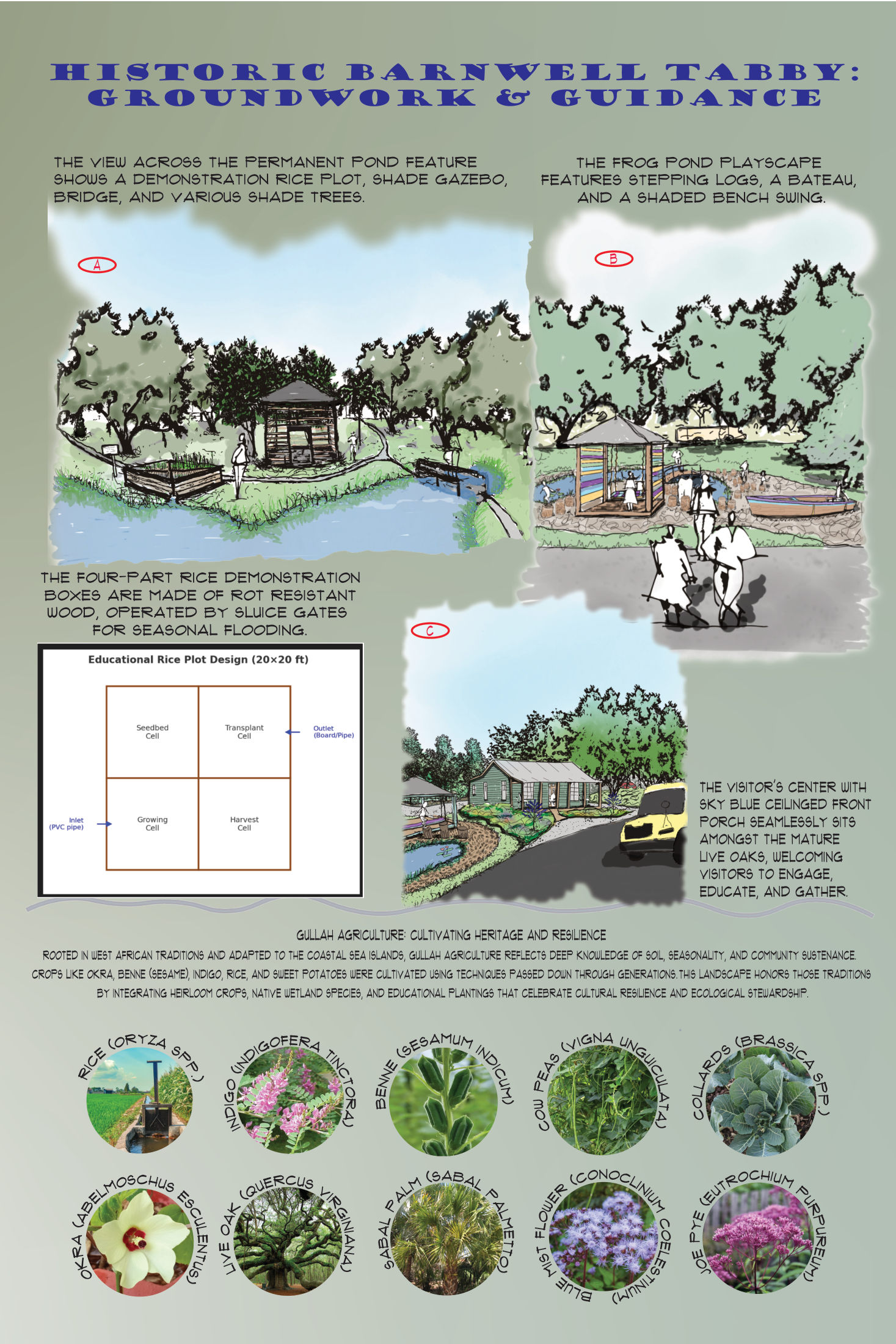
Gullah Agriculture: Cultivating Heritage and Resilience
Gullah agriculture reflects deep knowledge of soil, seasonality, and community sustenance. Crops like okra, benne (sesame), indigo, rice, and sweet potatoes were cultivated using techniques passed down through generations. This landscape integrates those traditions with native wetland species and interpretive plantings that celebrate cultural resilience and ecological stewardship.
Master Plan Features
- Rice demonstration plot with four rot-resistant boxes operated by sluice gates for seasonal flooding
- Permanent pond with demonstration rice plot, shade gazebo, and bridge
- Frog pond playscape with stepping logs, a bateau, and a shaded bench swing
- Visitor center with a sky-blue-ceilinged porch amid mature live oaks
- Pasture for ducks, geese & goats; chicken coop; goat pen and new barn
- Rain garden, wetland reserve, and interpretive signage throughout
Reading the Land, Shaping the Vision
Site analysis maps topographic contours at one-foot intervals to show how water moves across the property. Anticipated stormwater flow paths lead to designated low points, while swales and drainage channels control runoff and existing manholes serve as tie-in points to route overflow safely away from the site.