I've Fallen for Fall Meadows
Can we all just go ahead and agree that Fall is the best time of year? We southern gardeners have spent countless hours toiling away in the oppressive humidity - watering, weeding, harvesting … repeated again and again out of some otherworldly urge to spend as much time as possible under that bright, blue sky, that when the fresh breeze of fall starts blowing, it makes our hearts sing.
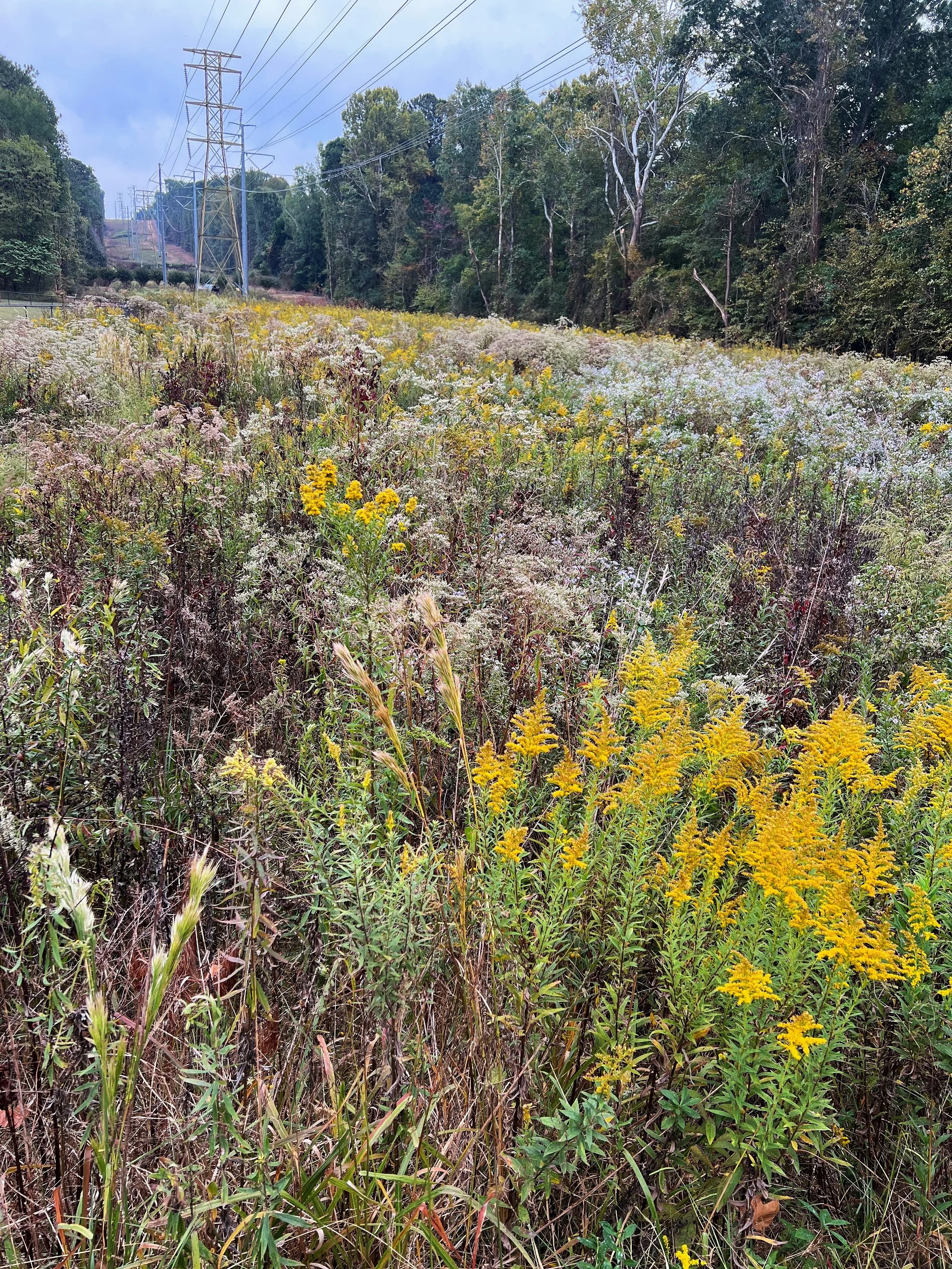
Aside from pumpkin spiced everything and the reemergence of the moody Victorian aesthetic, my favorite part of fall are the meadows of goldenrod, asters, eupatorium and grasses. So much texture. So much life. A beautiful snapshot of the changing of the seasons. I've fallen for fall meadows.
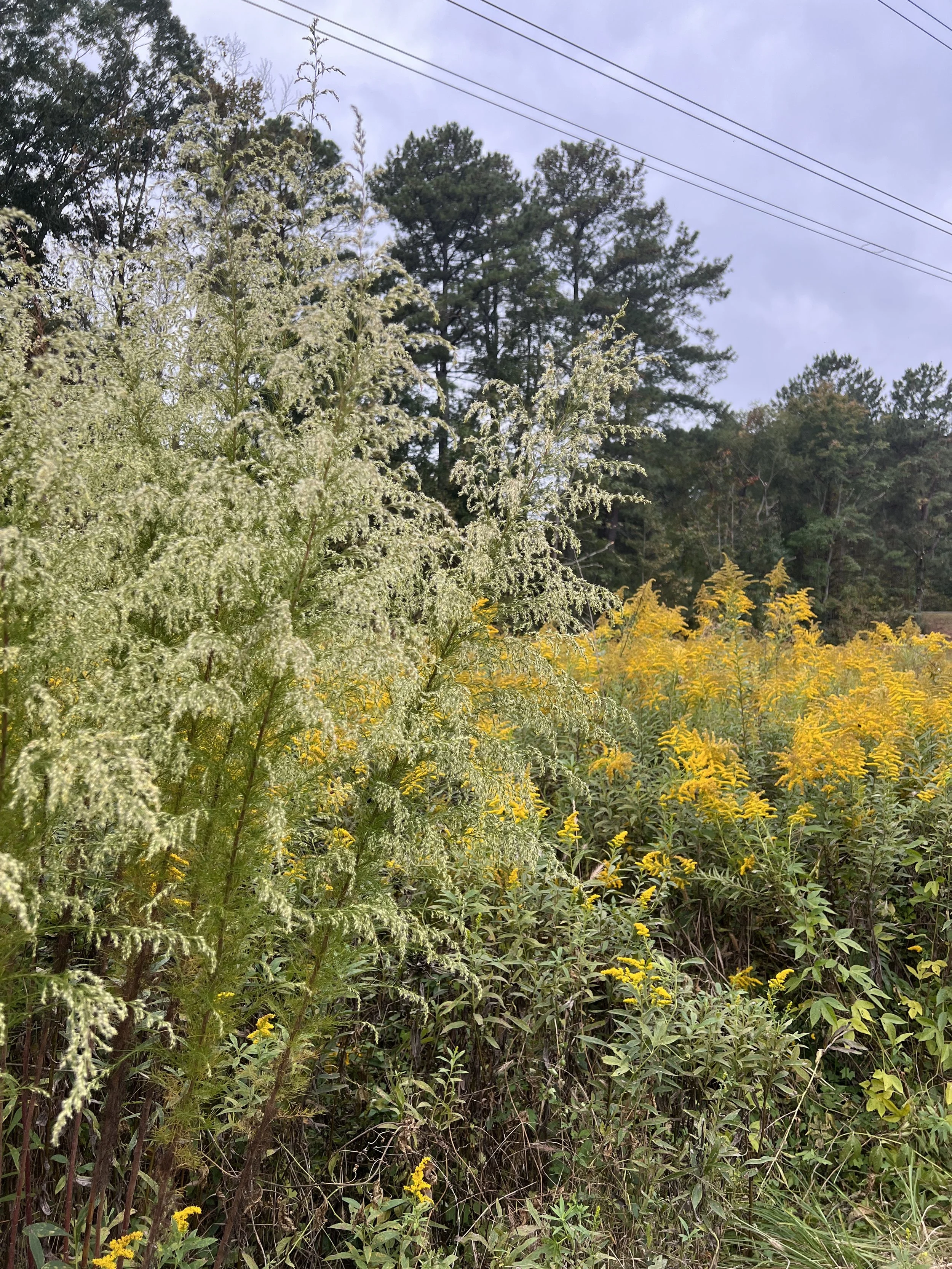
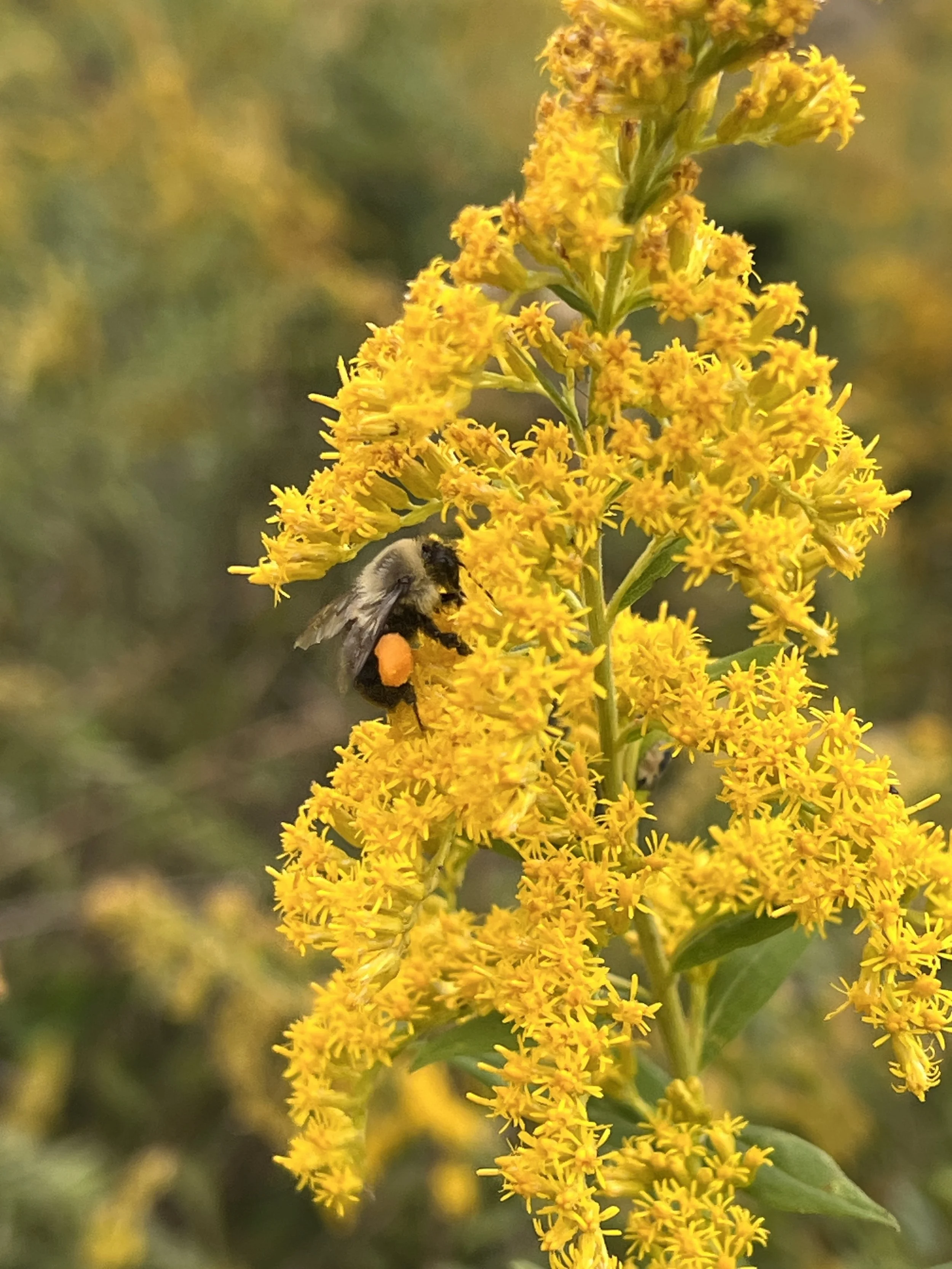
Goldenrod (Solidago spp.) - There are over 30 species in Georgia. Canadian Goldenrod, Solidago altissima, is what you are most likely seeing on roadsides this time of year as it spreads by rhizomes and produces allelopathic compounds, limiting neighboring plant growth and contributing to its prolific nature. They support the larva of the Wavy-lined Emerald Moth, specialized native bees and provide much needed late season nectar to pollinators.
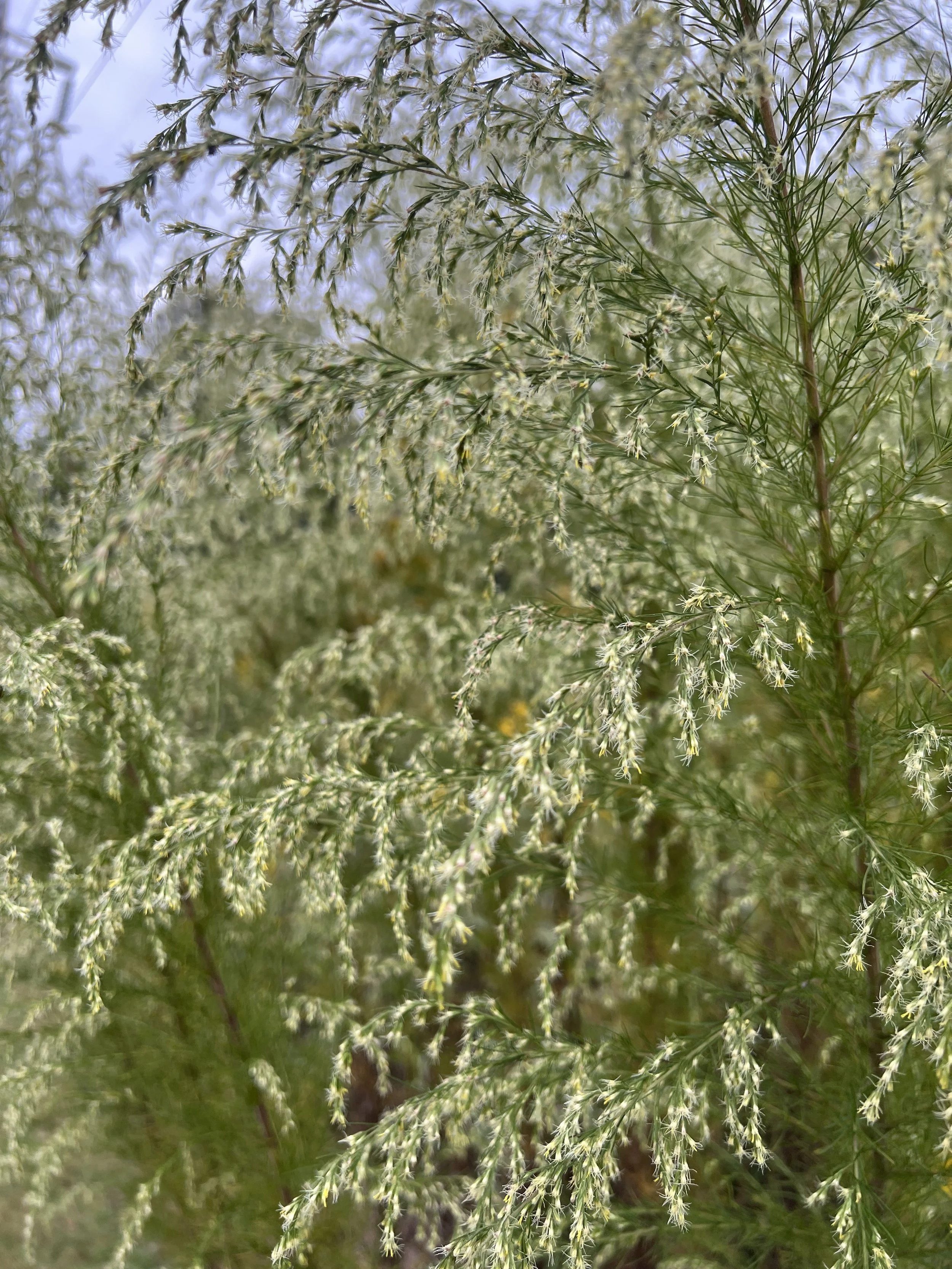
Dog Fennel (Eupatorium capillifolium) - In the Asteraceae family, it's so big and fluffy, you'll want to give it a hug. Tiny corymb shaped inflorescences (think Yarrow or cauliflower) that make this plant glow when in full bloom. Smells like dill when the leaves are crushed, but very poisonous if used as an herb in your cream cheese salmon dip. Used as an insecticide and antifungal, as well as an insect and reptile bite remedy.
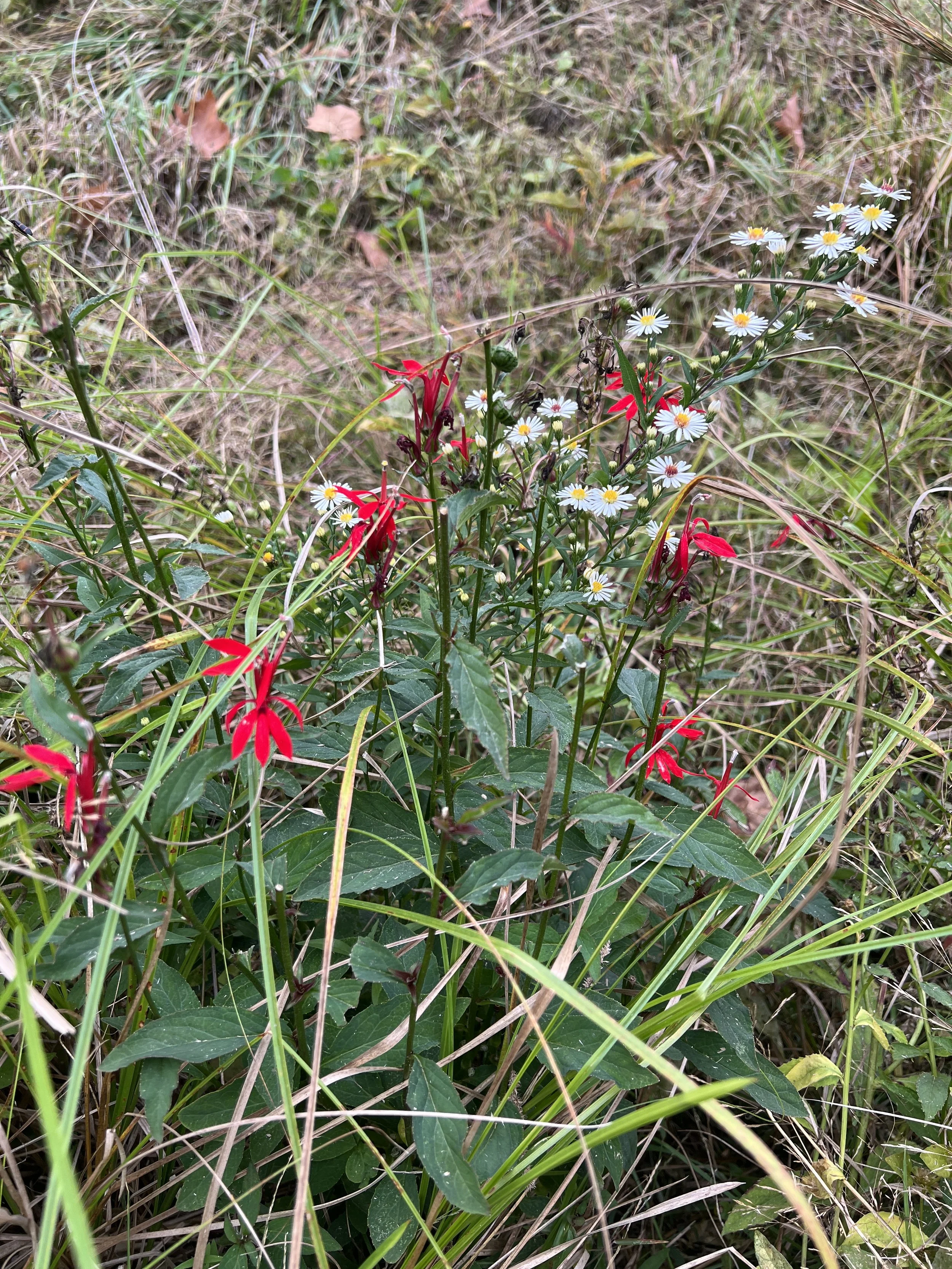
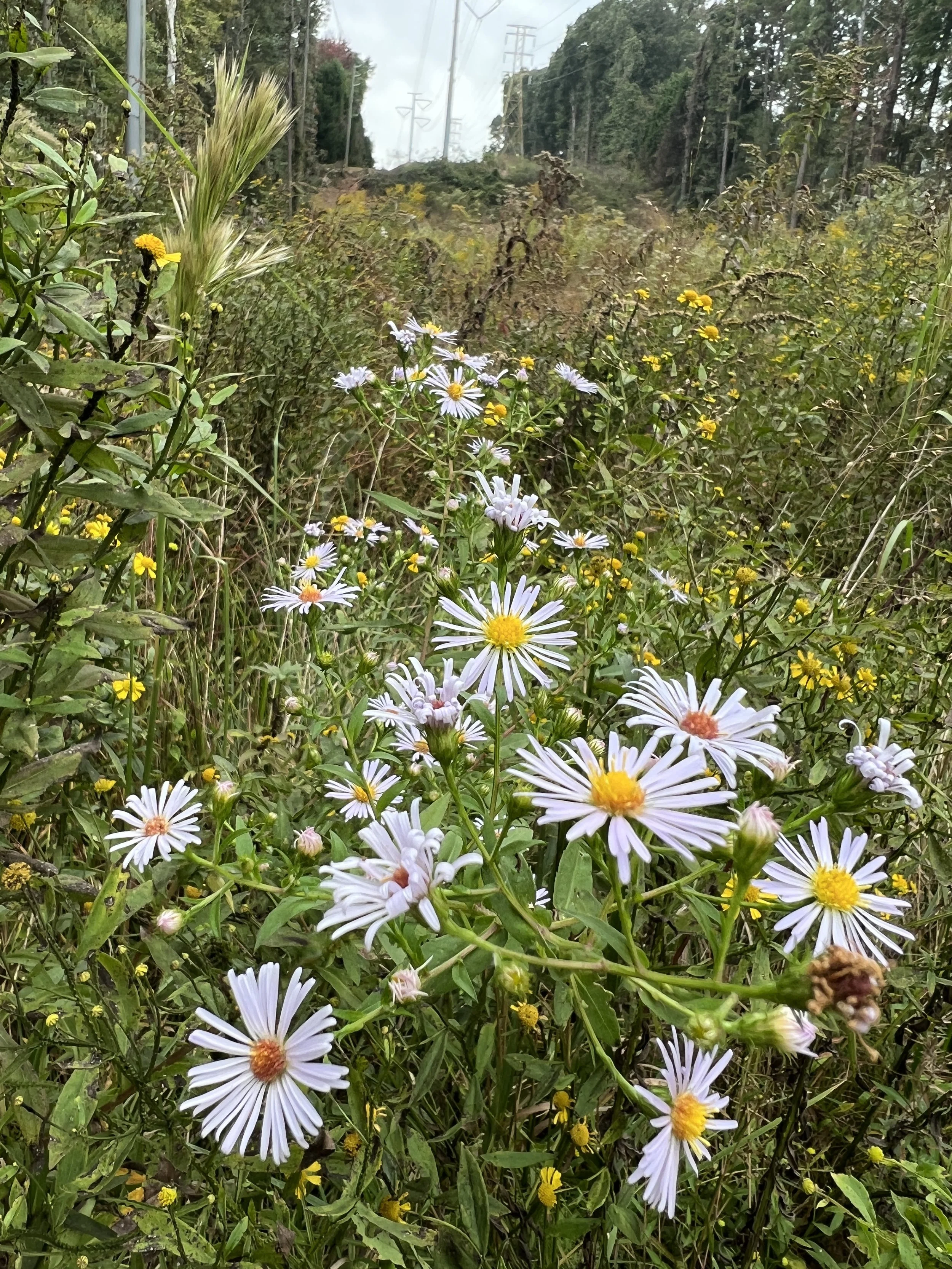
Asters (Symphiotrichum spp.) - Most commonly in my area, they are the floriferous white asters on wand-like stems. They can tend to look like a hot mess throughout much of the growing season until fall when they are covered head to toe with snowy, showy blooms. There are other species of fall blooming asters that have larger flowers and leaves and can have more purple color variations such as our stunning Georgia Asters (Symphyotrichum georgianum) or the Swamp Asters (Symphyotrichum puniceum) pictured below. Adored by pollinators and mammals alike.
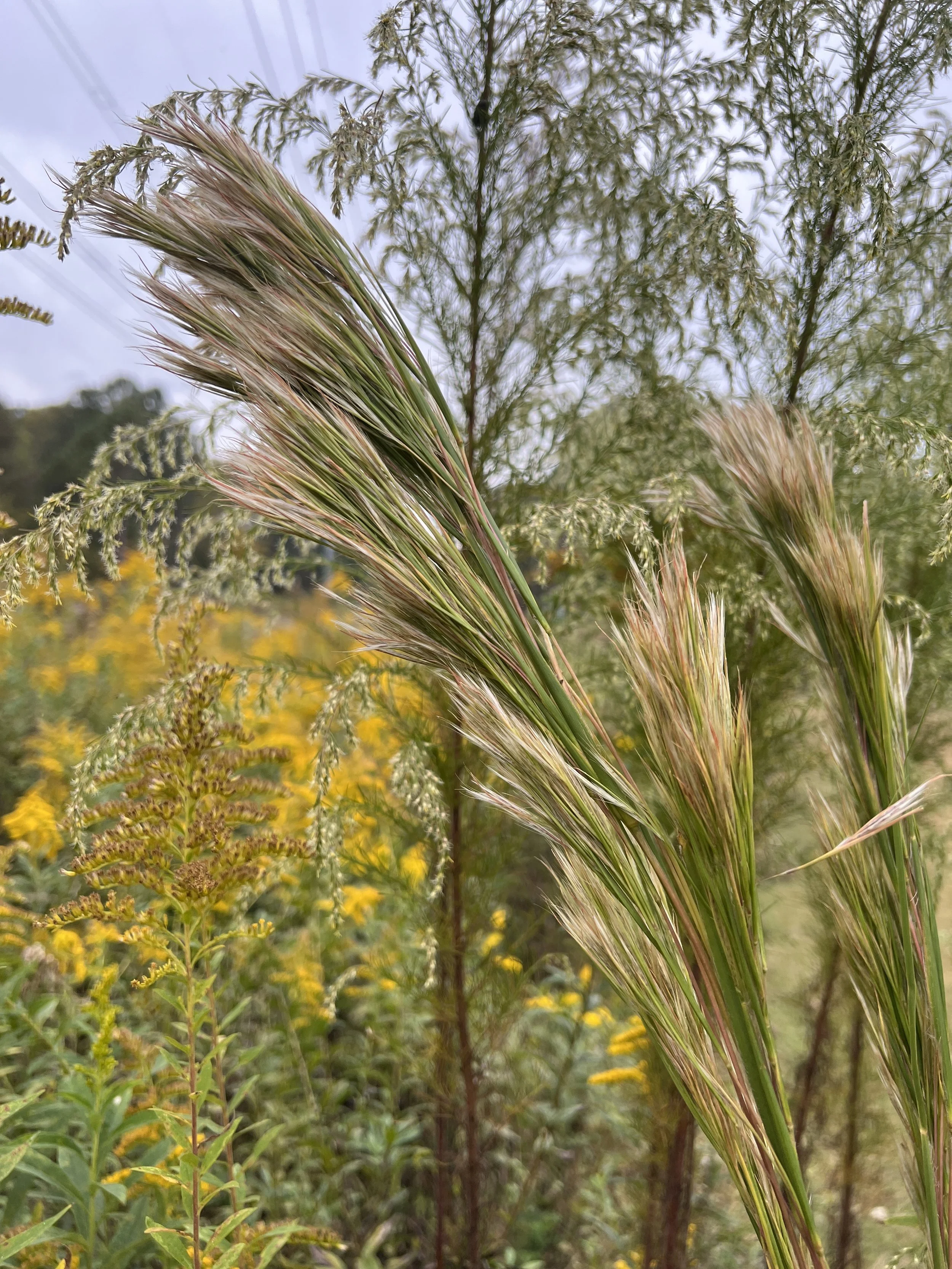
Broom Sedges (Andropogon spp.) - Upright, clumping grasses to 4' tall with the softest plumes of seeds. Golden fall color that looks great for fall decor. Larval host for wood nymphs and skippers.
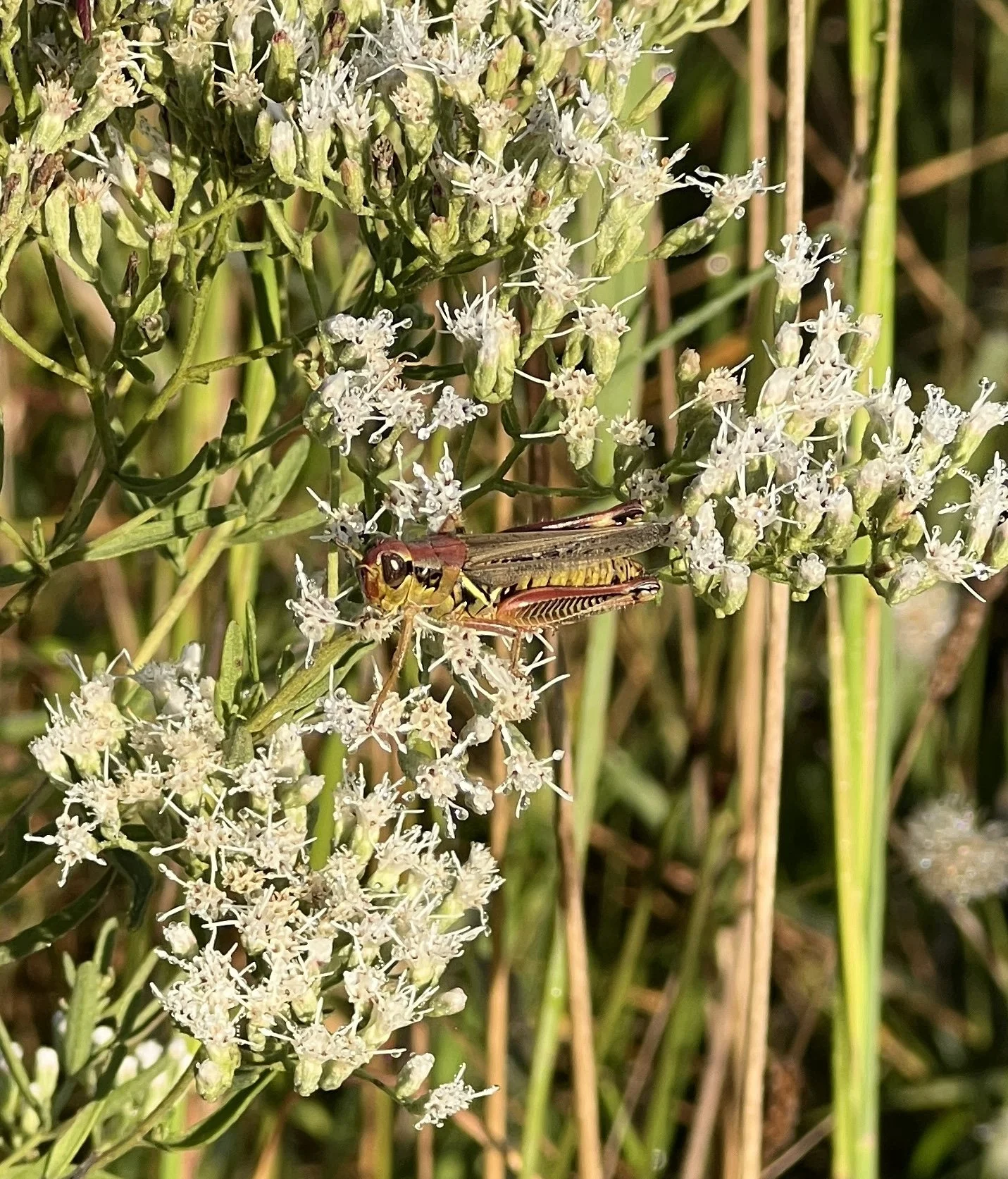
Boneset (Eupatorium spp.) - Standing tall and blooming profusely, attracting all manner of late season pollinators, the bonesets are a valuable addition to the late summer and fall meadow. Ethnobotanical uses were to treat fever related conditions such as Bonebreak or Dengue Fever. Hosts various lepidoptera and birds eat the seeds.